Please click here to view full 2026 ROFFS™ Bahamas Season Fishing Forecast as a PDF.
Bahamas Spring Season Fishing Update and Forecast for 2026: BAHAMAS LOOKING FAVORABLE
By: Matthew Upton
Introduction
For the past 24 years ROFFS® has been observing and forecasting the overall ocean and fishing conditions during the spring Bahamas Fishing Season from March to early June. The hypothesis for forecasting the seasonal billfish, specifically marlin action stems from the location of the darker blue and often warmer water that occurs from the Cat Island – San Salvador Island area and south to southeast of these islands where it is presumed that the marlin concentrate before, during and after spawning and then start to migrate north. We have been calling this water “blue marlin water” in our analyses. From satellite data, we can identify this water based on its ocean color/chlorophyll signature and sea surface temperature (SST) characteristics. Our hypothesis and experience have shown that the marlin and other pelagic species (such as tuna, dolphin and wahoo) are associated with this water and the more “blue marlin water” that exists in the Abaco to Cat Island areas early in the season, the greater the relative abundance of marlin in these areas closer to the islands.
We have also observed an association between the “blue marlin water” and the tuna and wahoo action in the Bahamas, northward along the western side of the Gulf Stream between Jacksonville, Florida and northward towards Cape Hatteras, North Carolina. We do observe evidence that when more “blue marlin water” passes north and northwest of Abaco to the eastern side of the Gulf Stream earlier in the season that a certain unknown proportion of the migratory fish move to the western side of the Gulf Stream and north. This brings more fish to the coastal fisheries at the edges of the Gulf Stream water throughout the spring to early summer season from northeast Florida to North Carolina.
Based on our observations in the Bahamas from Eleuthera to the Abacos over the last 39 years, it appears that excellent fishing action occurs within the Bahamas areas when there is a substantial volume of the “blue marlin water” pushing over the 100-500 fathom (600-3000 feet) and shallower ledges and good structure along the eastern side of Cat Island, Eleuthera and the Abacos. Relatively favorable fishing seasons occur when this water only occurs over the 500-1000 fathom depths, but does not reach the 100-500 fathom or shallower depths. Mediocre to poor years occur when there is a lack of this water over these areas or the “blue marlin water” is way offshore and pushes more north to northeast of the Abacos instead of west to northwest. However, in these cases, short pulses of this water bring fish into these areas regardless. Unless there is a sustainable flow of the water into these regions, the catch rates remain below average to average through the season.
The hypotheses and observations are also based on our experience using hourly and daily satellite data of the ocean conditions derived by ROFFS® (www.roffs.com), catch reports provided by a variety of sources for the past 39 years, and information derived from other sources of oceanographic data. We mainly use infrared (IR) satellite data to observe the sea surface temperature (SST) and the ocean color/chlorophyll data for indices of phytoplankton (chlorophyll), water clarity, and colorized dissolved organic material (CDOM) that are received from a variety of data sources including NASA, NOAA, and the European Space Agency (ESA) satellites.
Background and Data for 2026
Although we have learned that the favorable oceanographic conditions develop from the presence or absence of the “blue marlin water” during the main Bahamas fishing season (April-June), we continue to prepare the annual forecast from data around mid-to-late-March when tournament season starts up and more flock to the Bahamas for spring fishing. This allows us insight into the conditions prior to the spring season and understand the ongoing fishing success starting in March and continuing to June. We prefer to use real-time observations and have learned that evaluating the preseason conditions in January, February and March provides insight into future seasonal trends. We rely on real time satellite data, but also consult climate models. One indication is the SST in the core of the Gulf Stream off Miami and the SST of the Bahamas “blue marlin water” east of Cat Island to east of Long Island. Because we started our forecasting studies during the first week or two of March in 2003 we have continued our time series using that same time period to directly compare each year.
The ROFFS® 24 year mean SST for the core of the Gulf Stream off Miami is 78.8°F during our standard mid-March measurement period. This year the SST was approximately 78.7°F in the core of the Gulf Stream off of Miami on March 15-16th (2026), which is almost a degree cooler than last year (2025) and about 1.5°F cooler than 2024 and spot on the 24-year mean. While we have not been recording the SST of the Bahamas “blue marlin” water offshore of Cat Island to Long Island as long, the 19 year mean (2008 – 2026) SST for the warmer water east of Cat Island area is 77.2°F. This year the SST of the “blue marlin water” east of Cat Island/Long Island is about 77.5°F during the standard mid-March time period and about 0.8°F cooler than last year, and about spot on from the mean. Overall, the observations this March indicates that the SST is just slightly cooler overall and the Bahamas “blue marlin water” is overall cooler than the previous 2 years which is considered normal to the mean from the past 20 years. This suggests a more “normal” and not an early arrival of the higher numbers of billfish, tuna and wahoo action in this region. However, we see a different trend this year than last, as the overall SST in places appears to be slightly cooler, large areas of SST to the north of the Bahamas are warmer than previous years. In addition the SST east of Cat Island appears to be normal, but further south the SST east of Long Island is significantly warmer (79°F) than previous years. This trend suggests that the start of the early to peak marlin season might already have begun in some of the main Bahama regions.
We continue to monitor climate variability and ocean-wide circulation and consider other indices such as the North Atlantic Oscillation (NAO) and the Atlantic Multidecadal Oscillation (AMO). The NAO is the dominant mode of climate and seasonal variability in the North Atlantic region ranging from central North America to Europe and much into north Asia. The NAO is a large-scale variation in atmospheric mass between the subtropical high and the polar low. The corresponding index varies from year to year and month to month, but also exhibits a tendency to remain in one phase for intervals lasting several years. The NAO is a climatic phenomenon in the North Atlantic Ocean defined as the difference of atmospheric pressure at sea level between the Icelandic low and the Azores high. Through east-west oscillation motions of the Icelandic low and the Azores high, it controls the strength and direction of westerly winds, currents, and storm tracks across the North Atlantic Ocean. It appears to be one of the most important manifestations of climate fluctuations in the North Atlantic (https://www.ncei.noaa.gov/access/monitoring/nao/). This year (2026) the NAO index for January is negative and about the same as last year (-0.36) and also positive in February (0.68) but lower than last year. Typically the NAO is more important for driving the west to east winds (westerly’s) from 30°N latitude and north. Higher NAO index values or an increase in NAO index suggests stronger wind and more cooling so we expect both the atmospheric temperature and SST to be slightly warmer than normal and less windy this spring compared to the last two years. This data is slightly contradictory to the cooler than normal winters and stronger fronts we had later this winter, specifically in January and February.
The Atlantic Multi-decadal Oscillation (AMO) has been identified as a coherent mode of natural variability occurring in the North Atlantic Ocean with an estimated period of nearly 100 years. It is based upon the average anomalies of sea surface temperatures (SST) in the North Atlantic basin, typically over 0°-80°N latitude. (https://climatedataguide.ucar.edu/climate-data/atlantic-multi-decadal-oscillation-amo). The AMO Index for January and February 2026 is approximately 0.70 and 0.64 respectfully which is about the same as last year but slightly lower suggesting slightly loser to similar SST anomalies and a positive AMO. We have learned that the current positive trend in these indices suggest a decrease in speeds of the North Atlantic Ocean Circulation is occurring. This includes a possible slow decrease in current speeds of the Gulf Stream system. Also, a positive AMO is usually associated with a potential increase in the number of tropical storms that mature into hurricanes because the overall North Atlantic Ocean SST is higher. This does not take into account the wind shear variability and other aspects of tropical storm genesis. For easy to understand answers to frequently asked questions about the AMO see https://www.aoml.noaa.gov/.
Regarding El Niño we have yet to observe any direct relationship between El Niño – La Niña and the Southern Oscillation (ENSO) and the oceanographic conditions in the Bahamas area. Currently we are at the end of La Niña phase. We have been in a La Niña stage for the better part of the past 1-1.5 years suggesting an increase number of tropical storms in the North Atlantic Basin, which does agree with the current AMO readings of larger anomalies. However, it is forecasted that we are moving toward an ENSO-neutral stage by May and then transition to an El Niño stage by June/July and persist to the end of 2026 which could reduce the number of tropical storms this summer (https://www.cpc.ncep.noaa.gov/products/analysis_monitoring/lanina/enso_evolution-status-fcsts-web.pdf).
Nowcast and Forecast Analysis
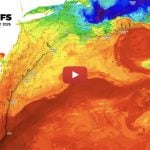
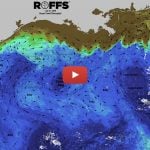
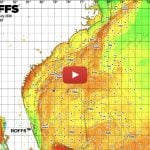
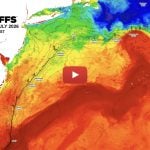
In this section we want to discuss and present the current oceanographic conditions (Figure 3 and Figure 4) and compare them to last year’s conditions (Figure 1 and 2) and what it means for this year’s prime fishing season. For clarification purposes Figures 1 and 3 were derived from a variety of NASA, NOAA, ESA, and JPSS satellite SST sensors during the mid-March period and Figures 2 and 4 were derived from the VIIRS, Sentinel 3, and NASA MODIS Aqua and PACE ocean color/chlorophyll imagery during the same mid-March time period. We also try to stay relatively consistent with our color palettes through the years to make it easier to directly compare the conditions by satellite signature.
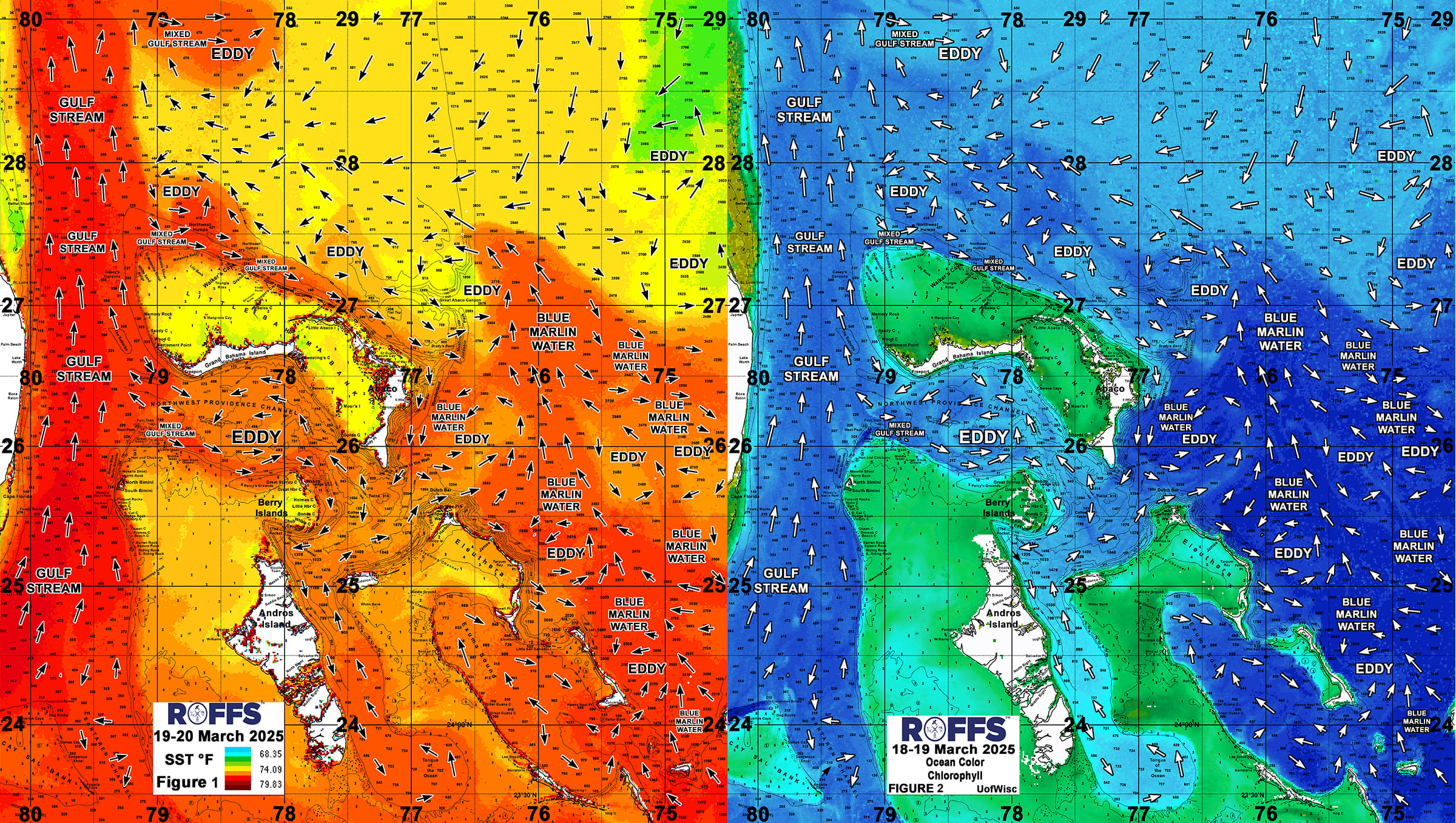
Figure 1: Last year’s conditions were derived from a variety of infrared sensors to get SST from NASA, NOAA, and ESA’s Sentinel 3 satellites during March 19-20, 2025 and Figure 2: Derived from the ocean color/chlorophyll imagery during March 18-19, 2025 from the ESA Sentinel 3 satellites, VIIRS sensors on SNPP satellite in combination with the Aqua and Terra sensor on the MODIS satellites provided by the University of Wisconsin SSEC. We consider this an image pair.
In both instances, we could not use single and same day imagery for the SST and ocean color data due to cloud cover interference, so we used a combination of imagery and the ROFFS® cloud reduction techniques to produce these relatively cloud-free images. For comparison purposes these images were constructed during the similar time period so are considered equal image pair for the purposes of this discussion. While these provide a visualization of the mid-March conditions, they also provide examples of how the eddy features, or lack of eddy features, and the water circulation are pulling the “blue marlin water” through the Bahamas. This is important for understanding the dynamics of the region. Both images for each year have the same arrows, eddy and “blue marlin water” labeling. The flow of the water was derived from our ROFFS® sequential image analysis of Lagrangian coherent features where we study several days of satellite imagery to follow the signature water masses and their motion. An example of this year’s SST satellite infrared imagery can be found on the ROFFS® YouTube site at (https://www.youtube.com/watch?v=4fSniYiRaeY) showing the flow of the water around the Bahamas region during the last two months, where the darker grey water represents the warmer water and white represents clouds.
Every year is different, and this year is no exception as the waters around the Bahamas look different than the last two years. Notably different, is the higher abundance of darker “blue marlin” water east of Abaco to east of Cat Island and the larger amounts that has made its way north of Abaco and to the Gulf Stream. These larger abundances of “blue marlin water” in the north indicates that there is a higher probability of the start of the larger populations of marlin, mahi and tuna population in the middle to northern Bahamas regions and perhaps earlier or normal arrival of these species in the northern Bahamas and further north along the coast of Florida, Georgia, and South Carolina.
The main obvious difference between this year and last year is that the water is about 1.0 degrees cooler in most places offshore than the previous two years, especially the areas near the Gulf Stream, east of Cat, Eleuthera and Abaco Islands. The “blue marlin water” overall is also cooler than but very close to the 20 year mean so considered normal or average conditions, likely contributing to the already good blue marlin action (with sailfish mixed in) in the Abacos the past two weeks and off of Chub Cay area. In fact, several boats have had really good blue marlin fishing east and northeast of Abaco along with a few grand slams with sailfish, spearfish and white marlin sprinkled in. This could be the first good wave of higher amounts of billfish these past few weeks into the Bahamas from the southeast with hopefully more to come. Another significant difference between this year and last year, is this year it appears there is an overall lack of strong distinct water mass boundaries specifically in SST, much of the area looks blended with just 1 to maybe 2°F breaks. This could lead to a lack of bait concentrations and a scattering of fish in many areas instead of a higher concentration. Furthermore, we want you to keep an eye on the warmer and stronger break east of Long Island and south to southeast of Rum Cay which looks GOOD right now for billfish and mahi down there, if this pushes north it could be good for fishing closer to Cat Island area into Exuma Sound.
As we take a closer look at the circulation, eddies and blue marlin water movement, we notice about the same number of total eddies this year compared to last year driving much of the dynamics around the Bahamas particularly in the east and north. The most encouraging conditions appears to be between the Abaco and Harbour Island area where the larger clockwise rotating eddy and the smaller counter clockwise rotating eddies has pushed in some darker blue marlin water not too far offshore south of the Wonderland and North Bar area to the Dutch Bar area and west. Areas off the northeastern Cat Island area looks to be favorable as well with water pushing in a favorable inshore direction. Conditions also look good north and northeast of Walkers Cay and northwest of Abaco as there are large amounts of blue marlin water (cooler) over the 250-500 fathoms and ledges. Overall there is an abundance of cooler 74-75°F water pushing from north to south over the Abaco Canyons down along the eastern Abaco coastal area that is creating a nice water mass boundary, cooler to the north warmer to the south, east of Cherokee area off of Abaco that has produced some good blue marlin action recently.
The main eddies to focus on in this area are the clockwise eddy centered east of southern Abaco (26°00’N & 76°20’W) and the counter clockwise eddy centered east of Abaco and further offshore near 26°40’N & 76°10’W. If these eddies remain intact and move further west or north, this will equate to good conditions east of Abaco closer to shore at it will continue to push larger amounts of warmer bluer marlin water into the canyons and good bottom structure for good fishing action. Of note is a large clockwise eddy way offshore (centered further east of this charted area) east Cat and Eleuthera Islands that is dominating much of the flow east and offshore of the Bahamas. In the north, the dominant flow is from the north to south of slightly cooler and mixed blended blue to bluer green water toward Abaco and south. If this trend continues and dominates the flow northeast of Abaco, it may not be as good fishing to the northeast of Abaco like Little Abaco Canyon and north. Please also pay attention to the larger clockwise rotating eddy centered north of Abaco (27°30’N & 77°10’W) and the counter clockwise rotating eddy centered way north of Abaco (28°45’N & 77°15’W). These eddies have already started to push south to south-southeast and becoming the dominant flow north of Abaco. This southern eddy appears to be pushing water in a favorable direction into the Great Abaco Canyon and south into the Jurassic Park and Mushroom to Little Abaco canyon area for improved conditions closer to the island.
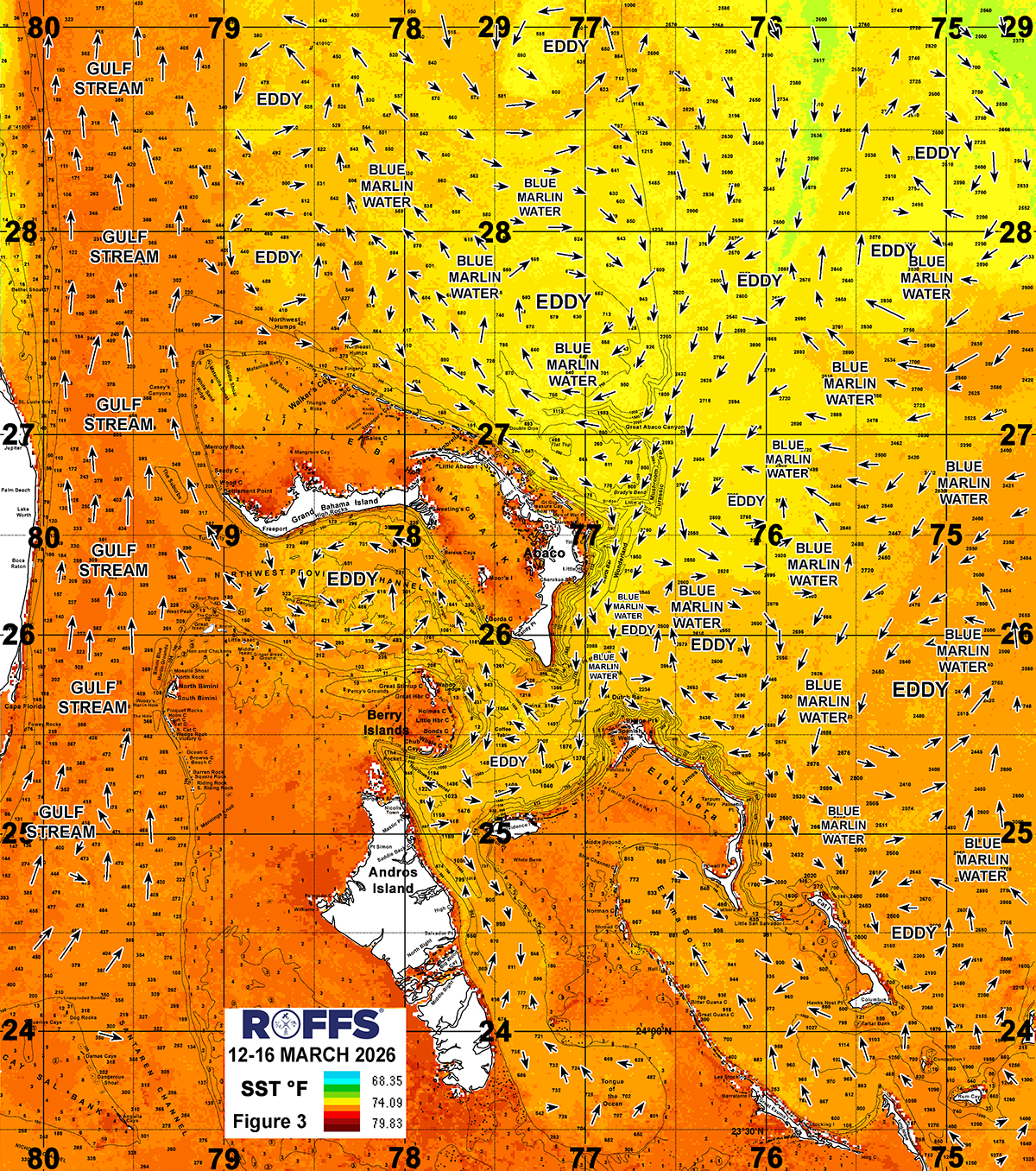
Figure 3: This year’s conditions were derived from a variety of infrared sensors to get SST from NASA, NOAA, and ESA’s Sentinel 3 satellites during March 12-16, 2026.
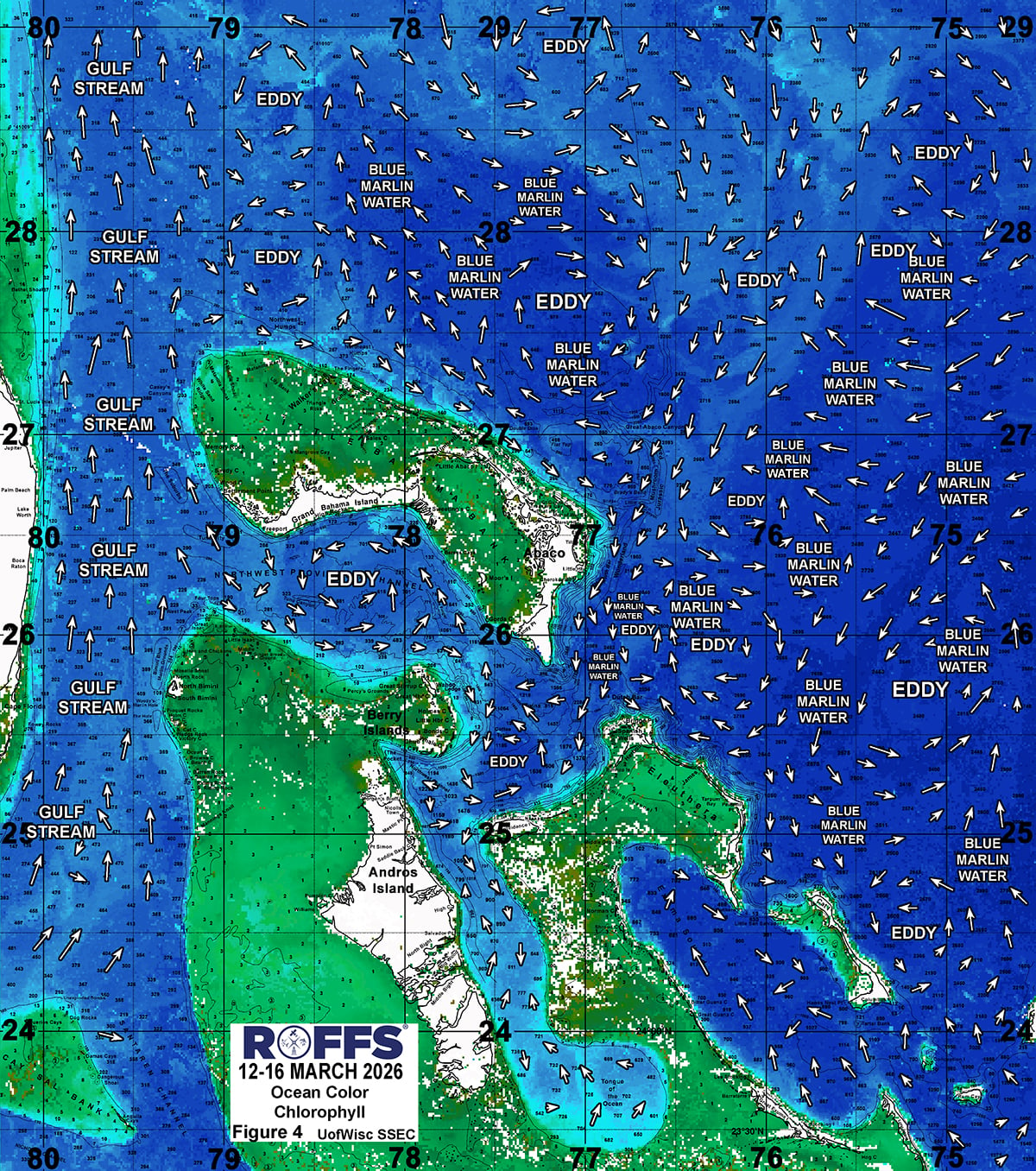
Figure 4: Derived from the ocean color/chlorophyll imagery during March 12-16, 2026 from the ESA’s Sentinel 3 satellites, NASA’s PACE and Aqua satellite sensors and VIIRS sensors on NOAA’s satellites provided by the University of Wisconsin SSEC and NASA OB.DAAC. We consider this an image pair with Figure 3.
Furthermore as always, if the wind and water is pushing into the Pocket south and southwest of Chub Cay, it can produce very good fishing action as there has been a few blue marlin and sailfish caught in this area already this season with several others spotted. Further west and north we continue to observe the traditional counter-clockwise rotating flow centered in the Northwest Providence Channel now centered northeast of Tuna Canyon. This eddy pulls in Gulf Stream water and interacts with the Island banks and provides good conditions for tuna, dolphin, wahoo and even marlin in this area along these eddy edges pushing over good structure and the banks. Farther north, north of Walker’s Cay and the Abaco Islands, conditions have been changing rapidly as you get closer to the Gulf Stream, however it is of note that there is a large amount of blue marlin water (cooler) north of Walkers to Abaco that is likely associated with the first bigger wave of billfish and hopefully mahi, tuna and wahoo. Eddies north between the Corner to Walkers typically drive some mixed Gulf Stream water to the east-east southeast along the ledges creating favorable water mass boundaries.
To back up our ocean observations, there is nothing more valuable than client feedback and reliable fishing reports where we enjoy catching up with our clients and learning what the water conditions are telling us. With that said, we have found some evidence of a possible normal or slightly early fishing season in the Bahamas by getting several promising fishing reports. There have been several blue marlin (more than normal for this time of year) caught east of Abaco, specifically off of Elbow Cay south to Cherokee Sound area. There has been several reports of also decent sailfish and spearfish action off of the Abaco’s. Further reports suggest the sailfish and blue marlin action are picking up off of Chub Cay with some promising conditions in that area including a counter clockwise rotating eddy centered north of Nassau area pushing water in a favorable direction to the north into Berry Islands ledges. There also has been some scattered reports of tuna and blue marlin caught north of Walkers and north of the Corner. However, overall we do not have an abundance of reports as most are just starting their Bahamas fishing season. Further south, off of Cat Island reports suggest the blue marlin are just starting to pick up slightly but there are not many reports of large amounts of mahi, tuna or wahoo yet. In fact, reports have suggested a slower than normal wahoo season so far in the Bahamas and into northern Florida.
As the water warms in the coming weeks, we anticipate that there is a good chance that a larger amount of billfish, tuna and other species will continue to be moving closer to the Bahamas Islands. Many times the bigger population of mahi come in later in the spring in April. These present conditions look different than last year, but already have indicators of a normal to slightly earlier start to the better fishing action similar to last year, but perhaps a slightly later than last year arrival of larger populations. So if fishing action is not good yet near your main Island, stay patient as all signs show that it should improve and warm up, especially for mahi and tuna and white marlin. So stay tuned to ROFFS® and order to keep track of the day-to-day better conditions for fishing action in the Bahamas. We will be monitoring these and other conditions that develop over the next several weeks and months as we do in other areas.
Concluding Thoughts
Based on what we have been observing in March thus far, it appears to be another average to good fishing season in the Bahamas. The way the eddies have set up this past few weeks has allowed a high amount of “blue marlin water” to push closer to the eastern Islands offshore of Long Island to Cat Island to Eleuthera Island and now directly southeast of Abaco Island. These larger amounts of “blue marlin water” closer to the Islands to the east and south is a GOOD sign of better fishing action to start the main fishing season. Furthermore, and more encouraging, is the larger amounts of “blue marlin” water north of the Abaco and approaching the Gulf Stream area signifying a better start to the season north of Abaco to north of Walkers and northwest up the coast of Florida and north. It is also going to be interesting to see how the cooler winter in most places (especially up north) will affect the ocean conditions and fishing around the Bahamas areas as the overall SST is cooler than last year but only by about 1.0°F in most places. We think it may be a good indicator keeping the SST’s slightly cooler early in the year and not over warming providing a normal to better fishing season into late spring. Conditions already look GOOD east of Long Island and southeast of Rum Cay to south of San Salvador and warmer.
Overall, the conditions look to be slightly cooler but closer to the average temperatures for this time of year around the Bahamas. Recent reports has suggested a larger amount of blue marlin and a few other billfish has already made its way east to southeast of Abaco Island and off of the Elbow Cay and northeast of Abaco. The better fishing appears to be starting slow off the southern islands, particularly for mahi, tuna and wahoo, but we expect these conditions to improve shortly. What to keep your eye on is the changing and moving of the main eddies talked about earlier and if the cooler (blue-green to blended) water that is pushing down from the north, northeast of Abaco Islands. If this southern flow keeps going it may not be great for conditions north and northeast of Abaco, but if the northern push of water takes over as it typically does (aided by the winds) then the conditions should improve over the next month east and northeast of Abaco as we get into the more active fishing and tournament season.
We will continue monitoring these ocean conditions within the Bahamas region closely over the next two months. As these main eddy features and currents progress, the areas of better fishing conditions will change and it depends on where the currents and eddies are pushing over good structure and toward the ledges and banks. Overall, it has already been a decent start to the Bahamas fishing season this late winter and early spring especially in the Abaco areas. Farther south, there is less marlin action (maybe related to lack of effort/reports) and not great wahoo and mahi action yet. With the cooler than last year’s SST conditions, it could indicate a more normal fishing season especially for billfish and also could indicate it may not get too warm in May and June not allowing the majority of the fish pass through the region earlier and move north. However, there will always be some resident fish that stays in the area until early-to-mid summer. Overall the conditions look BETTER and more stable than last year, especially north of Abaco to Walkers Cay areas closer to the Gulf Stream at this time mainly because of the larger abundance of darker “blue marlin water”, even though the SST is about 1.0°F cooler overall and boundaries are not that strong.
In conclusion, it is important to note that good fishing action on a daily basis is strongly linked to local, short-term (24-48 hours) current conditions that concentrate the fish once the preferred habitat of the fish are in a particular region. When the water masses and boundaries of these conditions are stable and favorable, i.e., continuously pushing over good bottom topography and structure then they concentrate the baitfish and larger fish can be found foraging. This means that the fishing action on any given day is controlled by daily and relatively small-scale (1-10 mile) movements of the currents and their water mass boundaries. Our experience indicates that to reliably forecast specific concentrations of fish on a daily basis, one must evaluate the ocean conditions on these scales. Relatively small subtle changes in the currents and their boundaries often have dramatic effects on the distribution and concentration of fish. Contact ROFFS® for these daily detailed fishing forecasting analyses and get the inside track to where the better conditions will be tomorrow. We highly recommend that you prepare now for the spring Bahamas fishing season and other fun fishing trips or your trip from the east coast of Florida as the conditions and fishing action is already good in many places and should improve over the next few weeks as the water warms and larger amounts of fish populations works its way north to northwestward toward the Gulf Stream and pushing closer to the other Islands.
Best of luck and stay in touch with ROFFS® on our web site www.roffs.com, over email ([email protected]) on Facebook/Instagram @roffsfishing or subscribe to our newsletter for additional news and reports related to where the better conditions for fishing action is occurring each week. Lastly, check out our new product FishCast powered by ROFFS® an automatic modeled forecast of the better fishing conditions overlaid directly on your Simrad® chart plotter with no additional hardware or on a desktop viewer. This is a great supplement to our regular analyses to maximize your experience out on the water. Check out this website for more information. https://www.simrad-yachting.com/fishcast/ Thank you for your continued support.
Safe and Successful Fishing from Team ROFFS®